
Kentuckians between 18 and 20 years old could soon receive provisional licenses to conceal carry firearms and other deadly weapons if House Bill 312 passes.
Kentucky has been a constitutional carry state since July 1, 2019.
Kentucky’s current concealed carry law allows people over 21 to conceal carry without a permit. The most common firearms legally concealed are handguns such as the SIG Sauer P365 and the Glock 19, which can only be purchased by those over 21. Other deadly weapons, as considered by law for concealed carrying, are brass knuckles, nunchaku, shuriken, knives (not including pocket or hunting knives) and clubs.
Rep. Savannah Maddox, the bill’s sponsor, said the current law is inconsistent with other rights established for Kentuckians between 18 and 20.
“House Bill 312 would align Kentucky with 25 other states, which already recognize that law-abiding citizens aged 18 to 20 have a constitutional right to carry concealed for self-defense,” Maddox said.
The 25 other states include Tennessee and Indiana, which border Kentucky. Some states that allow concealed carry require permits or exceptions for active-duty or honorably discharged military personnel.
Rep. Linsey Burke was one of three Democratic representatives to vote no on the bill.
“I’m concerned that what training does in the short amount of time that happens doesn’t mature an 18-year-old brain into a 21-year-old brain. And I worry that young people are at risk of self-harm,” Burke said.
As 18- to 20-year-olds can openly carry without concern, the implementation of the new bill would require proper firearms training for individuals who want to conceal carry and the standard background check.
Talan Hanks, a 19-year-old student at Murray State University, has been shooting since he was a child and has taken firearms classes before. He said he thinks the bill should pass because it requires training beforehand.
“I think it should be allowed, but only if they have the correct training to actually use firearms and carry them,” Hanks said. “If someone doesn’t have the proper training, then it’s very, very dangerous.”

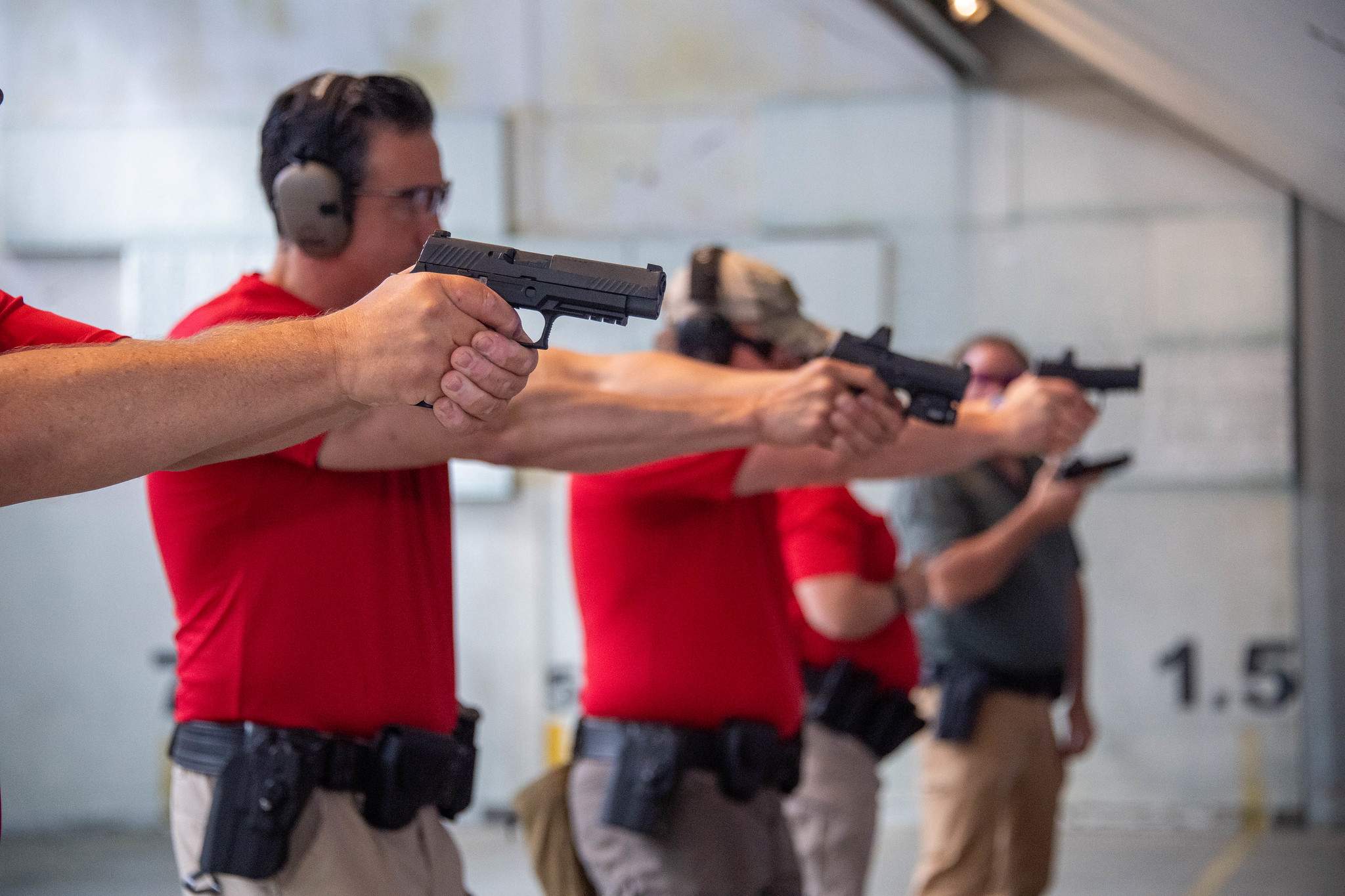
The bill would require applicants to pass a background check and complete mandatory firearms safety training. These training sessions are conducted by a Carrying Concealed Deadly Weapons (CCDW) certified instructor. The session lasts a minimum of eight hours and must result in passing an open-book test and successfully shooting 11 of 20 shots at a silhouetted target seven yards away.
Tracy McKinney, CCDW instructor and co-owner of FirstChoiceFirearms, said that the bill would help educate individuals about the rules and regulations surrounding firearms.
“We live in a community where the firearms are part of our lives. We’ve hunted all of our lives and our grandparents have hunted and stuff and so forth and so on,” McKinney said. “But that doesn’t mean you know all the safety rules or the laws when you can defend yourself and when you can defend another.”
The course offered by McKinney and John Farmer Jr., another CCDW instructor, teaches participants about gun safety, aim and the laws surrounding concealed carrying and firearms.
“We want people to learn. We want people to know when you can and can’t carry, and when you can defend yourself or another person,” McKinney said. “Owning a firearm is a huge responsibility. If they can open carry at this point, why would we not want them to conceal carry?”
Open carry laws allow people over 18 to openly carry firearms without a permit in most public places, with a few exceptions, including police stations and schools. Property owners can restrict open carry on private property and loaded and unloaded firearms can be carried in vehicles.
Mya Bolton, an 18-year-old student at Murray State University, said she doesn’t think 18- to 20-year-olds have matured enough to conceal firearms.
“There’s the outlook of ‘they can train and everything,’ but at the same time, our frontal lobes are not fully developed,” Bolton said. “I don’t think it would be very wise. I think we should keep it as it is.”
The bill is currently in the Senate’s Committee on Committees, where it will be designated to a standing committee for further review. If the committee approves the bill, it will be sent to the governor. Most bills do not make it out of the committees and ‘die.’
“Safety is the biggest focus,” McKinney said. “I think it would make our community safer knowing that age segment has had some training and knowing that they know where they can carry and where they can’t.”


